

Features

48 primary residence artist live-work spaces ranging from ~900–2600 s.f.
7 commercial condominium arts-related spaces
Nine-story building built 1898, brick, concrete and steel beam construction
Passenger elevator + ADA-compliant freight elevator
Café/atrium space and art gallery owned by the cooperative
Laundry room
Roof deck
Storage/darkroom spaces
There is no deeded parking associated with the building.
Maintenance and Capital Improvements

Rear view of 300 Summer St. showing north elevation rainscreen (photo via Berkeley Building Company)
We take care of our beautiful landmarked 1898 building! In 2021, we incorporated a policy to bulk up our capital reserve fund for major building-related upgrades. In addition, we focus on preventative maintenance and in-house monitoring of utility services for more accurate budgeting.
Work we have done since we purchased and developed the building in 1995:
2007-2008:
ROOF: New roof, roof deck, and related roof structures
NORTH ELEVATION: Masonry repointed, replaced most windows and sealant on floors 4-7, replaced floor-to-ceiling windows on eight floors
EAST ELEVATION: Partial masonry pointing, steel lintels removed/repaired
SOUTH ELEVATION: Partial masonry pointing and metal fascia repair
2014-2015:
MAKEUP AIR: Improved air ventilation in mezzanine atrium/kitchen
UPDATED LAUNDRY ROOM: New high-efficiency washers and dryers
LIGHTING: New energy-efficient LED lighting added throughout common areas of building
BATHROOMS: Remodeled mezzanine-level bathrooms
2017-2026:
NORTH ELEVATION: Landmarks-approved rainscreen added to protect against nor’easters
EAST ELEVATION: Window replacement, masonry pointing, cornice repair
NEW HVAC SYSTEM (heating/cooling): Four new energy efficient boilers, new fan coil units in every space, new roof chiller
CLIMATE RESILIENCY: New boilers installed on mezzanine level instead of basement
ELEVATORS: Major upgrades for freight and passenger elevators
BASEMENT: Repaired and painted halls; added new lighting; converted old boiler room to facilities manager office/workshop
BATHROOMS: Remodeled basement and first floor bathrooms
SECURITY: Added new ButterflyMX Entry System and security camera in main entry
SAFETY: Upgraded fire alarm system
Ongoing:
The entire façade is inspected every 5 years as required by law.
Location
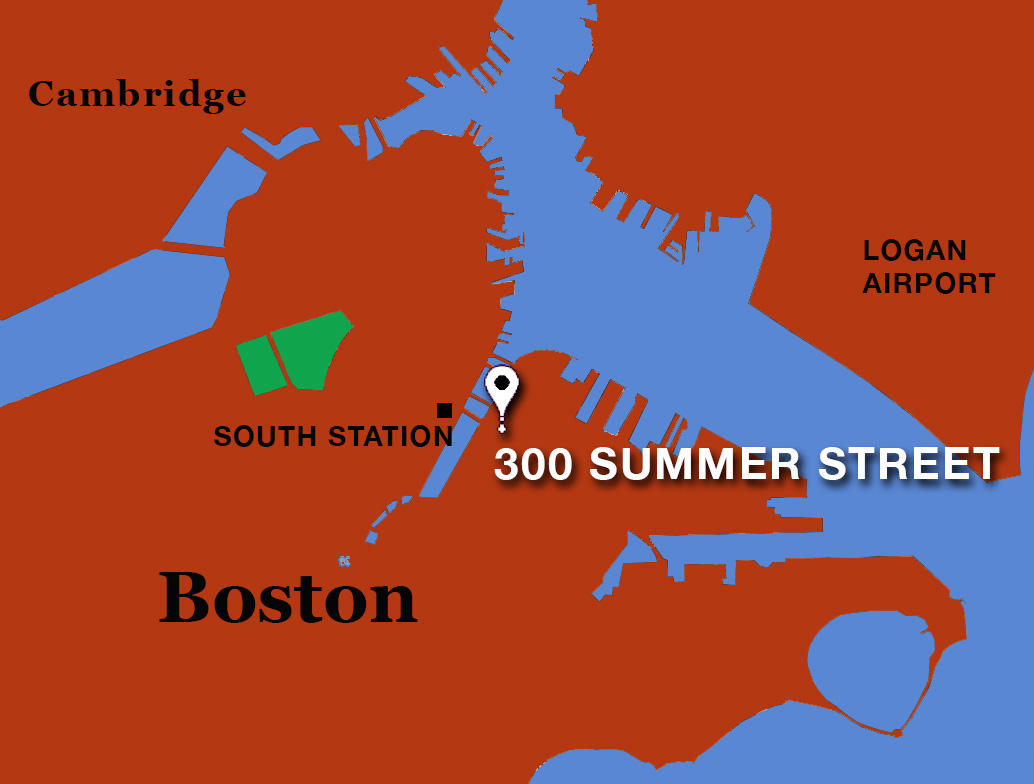
300 Summer Street, located in Boston’s vibrant Fort Point neighborhood near South Station, has high walkability, bike, and transit marks.
The building is near:
South Station - Amtrak, MBTA Subway and Commuter Rail, regional and national bus service
Interstates 90 and 93
Harborwalk and waterfront
Downtown Boston and Seaport District
Logan Airport
Grocery stores, restaurants, retail, etc.